Water bottles. To many of those fortunately able to live in a first-world country like America, water bottles aren’t typically a big deal. One can head to any Target, Safeway, QFC, even any liquor/convenience stores, and find bottled water for a few dollars.
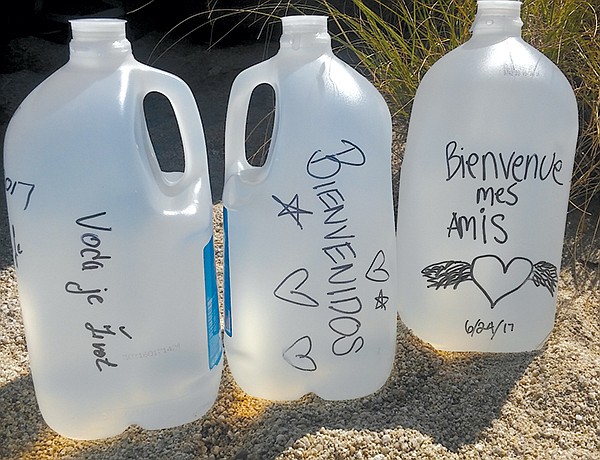
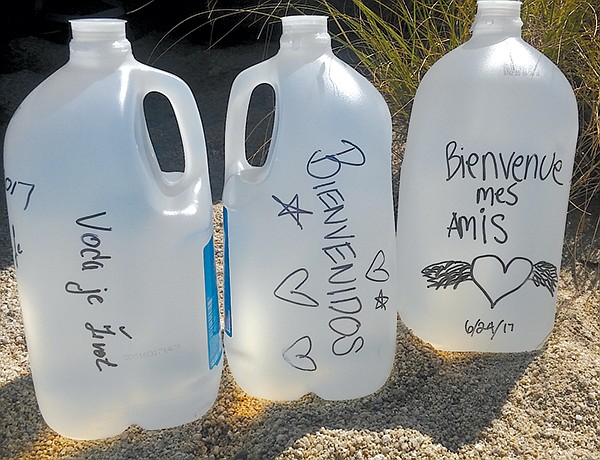
Among the Arizona deserts are intentionally placed water bottles. These bottles are scattered by humanitarians who seek to help migrants safely cross the U.S. border for better lives. These people know it’s no easy feat for migrants to battle the skyrocketing temperatures of the desert climate, and they scatter these water bottles for the sake of the migrants’ hydration.
These bottles are ordinary by all means, yet they have exhibit an emotional connection from one American to a migrant. The water bottles are marked with encouraging messages written with black permanent marker. Some examples of such inspiring phrases are “Good luck, friends,” or “Aqua es vida,” (Water is life, translated from Spanish). “Friends” obviously indicate of a relationship that the volunteers are trying to establish with the migrants, their way of welcoming the migrants to the land of the free. The latter phrase is a chipper-toned message that implies that the humanitarians want the migrants to keep going, to keep living — because life has beauty stored for everybody, including these hopeful immigrants.
Some bottles even have beaded necklaces with a cross charm wrapped around the neck of the bottle. It is interesting to note that a good percentage of Mexicans (81%) are reported to be Catholic. Essentially, the humanitarians accomplish two things with this necklace: 1. they utilize this dominant form of religion to establish a sense of community with the migrants, and 2. the necklace conveys hope that a higher form of power will intervene and that all will be okay. Despite the seemingly haphazard way that the necklace is tied around the bottle, it provides a powerful message that connects the migrants to not only the humanitarians, but to America and the people within it.
Traversing through the sweltering Arizonian desert is additionally notorious for its dangers; these migrants know what they’re getting themselves into. They too, hear the stories of crushed hopes and the perilous nature of travelling that involves violence and abuses of all sorts. Reading the encouragement on the water bottles, regardless of its brief phrasings, can serve the migrants an inkling as to the hidden beauties that America has to offer.
These same humanitarians, however, are found guilty in court for vandalism. This is solely because they have been placing water bottles in the Arizona/Mexico border area, aiming for those lucky migrants who pass them by. The philosophy is simple: some humanitarians and individuals in volunteer groups simply want to help others. Their good intentions are in turn, punished; evidently, the vandalism is for violating American soil. When have people grown so callous to others’ grave problems?
We can forget the politics, forget the laws — this isn’t even about water bottles. The humanitarians who pass on the water bottles for the migrants to pick up symbolize a relationship between people — the same relationship that the government severs when Border Patrol is organized to take the water bottles and destroy the volunteers’ efforts. All in all, the migrants and the humanitarians have a symbiotic relationship: the migrants have a physical relief of hydration, while the humanitarians attain the emotional gratification of knowing that they’re doing their part to help this national crisis.
Although water bottles seem insignificant to fortunate people like us, they are absolutely necessary to migrants. The bottles not only provide the essential needs for life, but also an emotional connection to a country that exhibits xenophobia and perpetuates hate for those simply seeking improvement in their lives.
I had thus decided to call my blog “Move Like Water” as a parody of the Bruce Lee quote, advising one to “empty [their] mind, be formless, shapeless, — like water.” To let go of any prejudices we have against other people, we must maintain a fluidity that resembles water, which will then commence the flow of acceptance. Tying the key points of migration and interconnectedness, I tweaked the quote to “Move Like Water;” I have full hopes that the water flows to streams of acceptances and empathy that strikes people emotionally — all stemming from my artifact of bottled water.
To conclude, this artifact project constantly reminded me of a picture that Professor Schweik displayed on the projector during class towards the beginning of the semester. It was a brightly colored butterfly with the caption as “Migration is beautiful” under the insect, along with two striking faces on each wing. My artifact truly captures the beauty of humans, rather than highlighting the insensitivities of the world today. People are most definitely capable of compassion and connecting with those of different races, cultures, sexualities, etc. — proving that migration truly is beautiful due to the people that contribute for a better world.
Lastly, I’d like to thank Professor Schweik for this idea for my artifact project. I was able to find beauty and human interconnectedness within a banal object through intense analyses and research, and it was a thought-provoking semester that allowed me to grow in my empathy and awareness.

 Move Like Water